Aromatherapy Reed Diffusers release fragrance gradually through reeds placed in a container of scented liquid. The reeds absorb the mixture and carry its aroma into the surrounding air. There is no flame, plug, or scheduled spray. Just a bottle, a few reeds, and time.
That simplicity makes them easy to use in a bedroom, hallway, or living room. A gentle fragrance can make a space feel more inviting, though scent preferences differ from person to person. “Aromatherapy” is often used to describe products scented with essential oils, but the term alone does not prove a health benefit. And honestly, fragrance can promise more than it delivers.
A diffuser’s performance depends on its formula, the number of reeds, room size, and airflow. A small bottle may scent a powder room but barely register in a large, drafty space. Turning the reeds can briefly strengthen the aroma, while also increasing evaporation. More scent is not always better.
Placement matters. Keep the bottle on a stable surface, away from direct sunlight, heat, and areas where children or pets could reach it. Avoid contact with skin and delicate finishes, and follow the product label for handling and ventilation guidance. This guide explains how Aromatherapy Reed Diffusers work, what their ingredients and care instructions mean, and how to choose one realistically. A little caution helps.
What an Aromatherapy Reed Diffuser Is
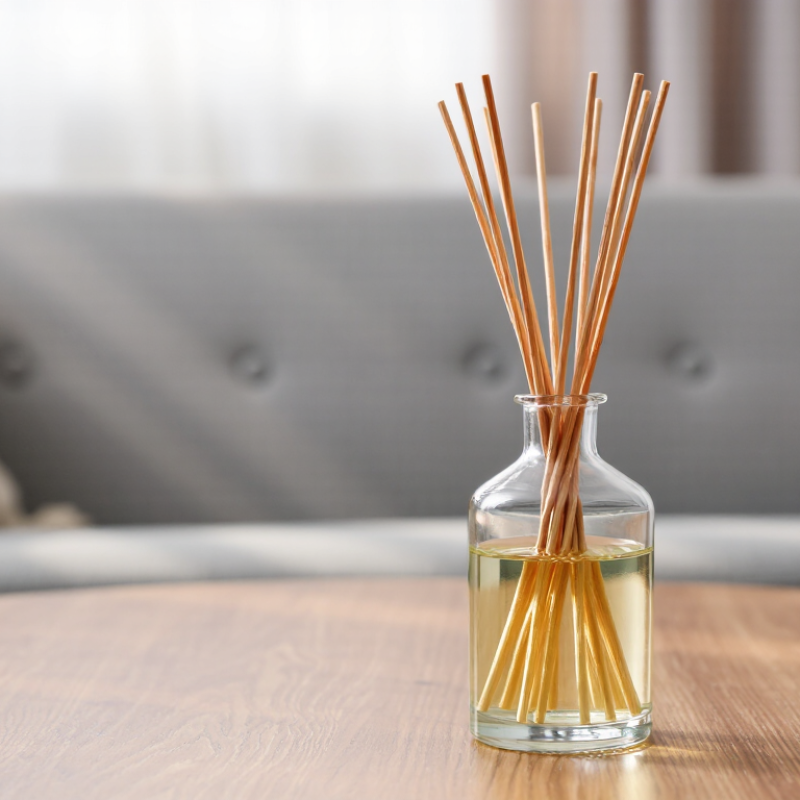
An aromatherapy reed diffuser is a container of scented liquid with porous reeds placed inside. The reeds draw the liquid upward, then release fragrance into the surrounding air. No flame, plug, or spray is needed. A glass bottle on a shelf and several slim reeds are the familiar setup.
The liquid usually contains fragrance materials and a base that helps them travel through the reeds. As the liquid reaches the exposed ends, some of it evaporates, creating a gentle scent nearby. The strength depends on the room’s size, airflow, number of reeds, and formula. “Aromatherapy” describes the use of aroma for atmosphere; it does not guarantee a medical effect. A pleasant scent may feel calming to one person and distracting to another. That part is personal.
Tips: Place the diffuser on a stable, protected surface, away from children, pets, and direct sunlight. Start with fewer reeds if the scent feels strong, and turn them only as directed by the product instructions. Wash hands after handling them. A small room can become overpowering faster than expected, so check the scent after a few hours rather than assuming more reeds are better. Simple, but not magic.
The Main Components and Their Roles
What Are Aromatherapy Reed Diffusers?
The Main Components and Their Roles
A reed diffuser releases scented liquid into a room without a flame or powered heater. Its parts work together through evaporation and capillary action. The reeds draw liquid upward through tiny channels, then expose it to moving air. That’s the basic mechanism.
The vessel holds the mixture and keeps it upright. A narrow neck can slow evaporation, while a wide opening may release scent faster. The diffuser base, often a carrier liquid, helps fragrance travel up the reeds. Fragrance may come from essential oils, aromatic compounds, or a blend. Check the label to see what is included. The liquid’s balance matters. Too thick, and it may climb slowly; too thin, and it may disappear quickly.
Reeds are usually made from porous rattan or engineered fiber. More reeds can increase scent output, but they also use liquid faster. Flip them only when the scent seems faint, and protect surfaces from drips. Not magic. Room size, airflow, and temperature all affect performance, so results vary. I would not treat the scent as a medical benefit. Keep the vessel away from children, pets, direct sunlight, and delicate finishes, and follow its handling instructions.
What Are Aromatherapy Reed Diffusers? The Main Components and Their Roles
A reed diffuser uses scented liquid and reeds to release aroma into the air. The vessel holds the mixture and supports the reeds; fragrance oil provides the scent; a carrier base helps the liquid travel through the reeds; and the reeds draw up the liquid and expose it to the air for evaporation. Counts show the number of these core roles listed for each component, not a measure of performance.
How the Diffuser Releases Fragrance
A reed diffuser releases fragrance through capillary action. The lower ends of porous reeds sit in scented liquid, which travels upward through their narrow channels. The reeds act like tiny wicks. At the exposed ends, fragrance molecules gradually evaporate and mix with the room’s air. No flame or fan is needed. The scent usually develops gently, rather than filling a room instantly. That is the basic mechanism.
Room conditions affect how quickly this happens. A warm windowsill may speed evaporation, while moving air can carry the aroma farther. Adding more reeds often increases scent strength, but the liquid may run out sooner. Turning the reeds can expose freshly soaked ends and briefly make the fragrance more noticeable. It varies. In practice, scent intensity is not perfectly predictable; room size, airflow, and personal sensitivity all matter. A diffuser may smell strong near a shelf but barely register across the room, which can be a little disappointing. Keep it upright on a stable surface, since spilled fragrance can mark some finishes.
What Are Aromatherapy Reed Diffusers? - How the Diffuser Releases Fragrance
| Part or factor |
What it is |
How it releases fragrance |
What affects performance |
| Fragrance solution |
A liquid blend that usually contains fragrance materials and a carrier liquid. |
The liquid wets the reeds. Fragrance compounds then evaporate from the exposed reed surfaces into the surrounding air. |
Formula, temperature, airflow, and the volatility of the ingredients influence how quickly the scent is released. |
| Reeds |
Porous sticks, commonly made from rattan or manufactured fiber. |
Capillary action draws liquid upward through small channels or pores. The wetted portions of the reeds provide surfaces for evaporation. |
Reed material, length, thickness, number of reeds, and exposed surface area can affect the rate of release. |
| Capillary action |
The movement of liquid through narrow spaces without a pump. |
Interactions between the liquid and the reed’s internal passages help carry the solution from the reservoir toward the exposed ends. |
Clogged or poorly suited reeds may draw liquid less effectively. Reed performance also depends on the liquid’s properties. |
| Evaporation |
The change of fragrance ingredients from liquid to vapor at the surface. |
As volatile fragrance compounds evaporate from the reeds, their vapor disperses through the room. |
Warmer air and moving air often increase evaporation and dispersal; cooler, still air can reduce them. |
| Air movement |
Natural circulation from ventilation, open doors, or people moving through a space. |
Air currents carry fragrance vapor away from the reeds and mix it into the surrounding air. |
Moderate circulation can help distribute scent. Strong airflow may make the liquid evaporate more quickly. |
| Reservoir and opening |
The container holding the fragrance solution, with an opening through which the reeds pass. |
The reservoir supplies liquid to the immersed ends of the reeds while the exposed portions release fragrance. |
Container opening size, liquid level, and the number of reeds used can influence exposure and consumption. |
| Reed turning |
A way of refreshing the exposed ends by turning the reeds over. |
Turning can place freshly wetted sections in the air, briefly increasing the exposed wet surface. |
It may also increase evaporation or cause drips. Handle reeds carefully and follow the product’s use instructions. |
| Passive operation |
A fragrance-diffusion method that does not require a flame or electrical power. |
Liquid travels through the reeds and releases fragrance through evaporation, rather than being heated or mechanically sprayed. |
Placement, room conditions, formula, and reed setup determine the scent’s reach and how long the liquid lasts. |
In short: Reed diffusers release fragrance as liquid rises through porous reeds and evaporates from their exposed surfaces. They do not actively control fragrance output, so room conditions and setup affect the result.
Factors That Affect Scent Strength and Duration
Aromatherapy reed diffusers release fragrance as liquid travels up porous reeds and evaporates into the air. Their scent strength and lifespan depend on several conditions, not just the bottle’s size. Warm rooms usually speed evaporation, while cool rooms slow it. Direct sunlight, heating vents, and open windows can also change how quickly fragrance disperses. A diffuser beside a sunny window may fade faster than one on a shaded shelf.
Reed count and room airflow matter, too. More reeds expose more surface area, often creating a stronger scent but using the liquid sooner. In a large or drafty room, fragrance may feel faint even when the bottle is full. Turning reeds can refresh the scent briefly, though it may also increase evaporation. Small details count. Keep the diffuser away from vents, and compare the liquid level weekly. Change one factor at a time; otherwise, it is hard to tell what helped.
There is no reliable universal runtime for every room and formula. ASTM E544-10(2017) provides a practice for referencing odor intensity, while IFRA’s Standards address fragrance-ingredient safety; neither promises a fixed number of days for a diffuser. That distinction matters. Your nose can also become accustomed to a steady scent, making it seem weaker than it is. I would not judge performance from memory alone. Note the room temperature, reed count, and liquid level, then reassess after a few days.
Common Uses and Basic Safety Considerations
Aromatherapy reed diffusers release scented liquid as it travels up porous reeds and evaporates. People use them to freshen bathrooms, entryways, and work areas without a flame or electrical plug. A small diffuser on a shelf can provide a steady scent, though a tiny room may become overpowering. Start with fewer reeds and adjust after several hours. Keep it simple. Fragrance preference is personal, and a pleasant smell is not proof of a health benefit. The U.S. Environmental Protection Agency’s The Inside Story: A Guide to Indoor Air Quality reports that indoor pollutant concentrations are often two to five times outdoor levels. This figure is not specific to diffusers, but it supports regular ventilation.
Basic precautions matter because diffuser liquid can spill, irritate skin, or be swallowed. Place the vessel on a stable, protected surface, away from children, pets, sunlight, and heaters. Wash hands after handling reeds, and follow the product label for cleanup. A National Poison Data System analysis recorded 10,523 pediatric essential-oil exposures from 2011 to 2015. Those cases covered essential oils broadly, not reed diffusers alone, but they underline the need for secure storage. If liquid gets into someone’s eyes or is swallowed, contact a local poison center or healthcare professional promptly. Reed diffusers seem low-effort; spills are easy to underestimate.
Conclusion
Aromatherapy Reed Diffusers are simple, flame-free ways to add fragrance to an indoor space. They typically consist of a container, scented oil, and porous reeds. The reeds sit in the oil and draw it upward through tiny channels; fragrance then gradually disperses into the surrounding air. Turning the reeds may briefly refresh the scent, though it can also increase oil evaporation.
How strong and long-lasting the fragrance is depends on factors such as room size, airflow, temperature, the number and type of reeds, and the oil’s composition. These diffusers are often used in living areas, bedrooms, or workspaces to create a pleasant atmosphere. For basic safety, place the container on a stable surface away from children, pets, heat, and open flames. Avoid ingesting the oil, keep it off skin and delicate surfaces, and follow the product’s handling instructions.
