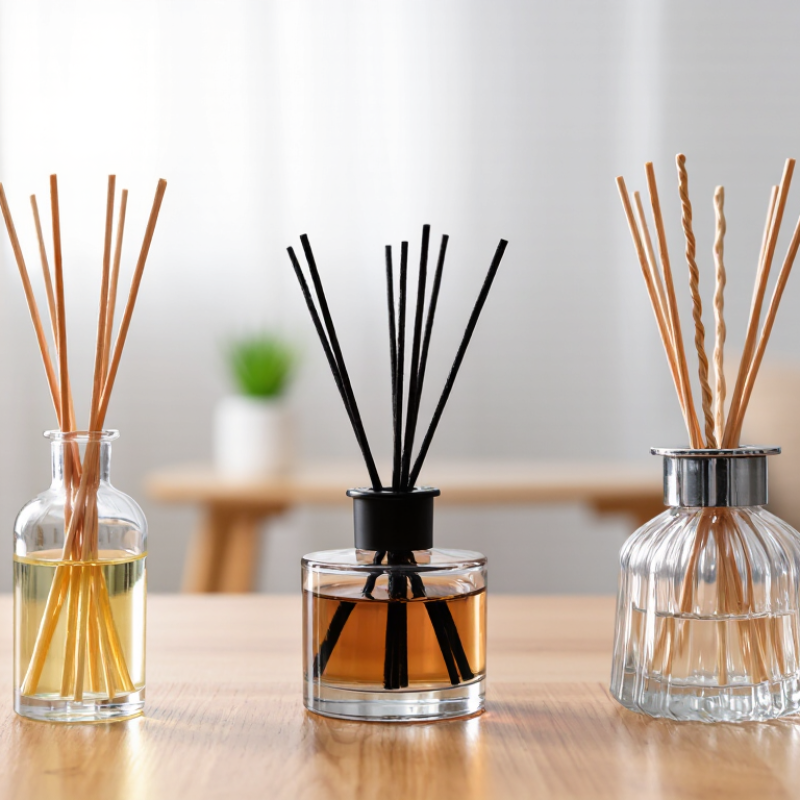
Choosing among Reed Diffusers is not just a matter of picking a pleasant scent. The reeds, fragrance base, bottle opening, and room conditions all shape how a diffuser performs. A slim glass bottle with natural rattan reeds may suit a small bedside table. Fiber reeds can offer a different diffusion rate and appearance. Some designs prioritize a stronger scent; others favor a subtle, steady presence.
This guide compares the top types, including traditional rattan-reed diffusers, fiber-reed designs, and options with adjustable or decorative sticks. It also explains practical differences: how quickly reeds absorb fragrance, how often they may need turning, and why a wide bottle opening can affect evaporation. Small details matter. So does the room. A diffuser that feels balanced in a hallway may seem overpowering beside a desk. Results can vary, and scent strength is not always easy to predict.
Fragrance educator and perfumer Karen Gilbert is a relevant professional voice, but no verifiable quotation from her about Reed Diffusers was provided. Rather than invent one, this introduction avoids a false attribution. That gap matters. It is also a reminder to treat broad product claims with care. The sections ahead focus on observable design features and everyday use, helping readers compare types before choosing one for their space.
Traditional Rattan Reed Diffusers
Traditional rattan reed diffusers use porous reeds to draw scented oil upward and release fragrance into the room. The reeds’ small channels support this steady movement, though the scent usually feels gentle rather than immediate. That matters. A diffuser can suit an entryway, bedside table, or bathroom where a soft background aroma is preferred.
Reed count affects how noticeable the fragrance becomes. More reeds may increase diffusion, but they can also make the oil run out sooner. Start with a few, then add one if the room still feels unscented. Turn the reeds occasionally, using a tissue or gloves if the oil irritates your skin. Keep the vessel on a stable, protected surface, away from direct sunlight, heaters, and curious pets. Warmth and airflow can change how quickly the oil evaporates. Not always predictably.
Rattan reeds may become saturated or dusty over time, so replacing them can help restore the scent. Flipping them every few days is common, but frequent turning may make the fragrance stronger and shorten the diffuser’s life. There is no perfect schedule. Room size, ventilation, and the fragrance formula all make a difference, so observe the oil level and adjust gradually. A faint scent after a week does not necessarily mean the diffuser has failed; placement may be the real issue.
What Are the Top Types of Reed Diffusers? - Traditional Rattan Reed Diffusers
| Feature | Traditional Rattan Reed Diffusers |
|---|---|
| Reed material | Natural rattan, a porous plant material with small channels that help draw fragrance liquid upward. |
| How it works | Fragrance travels through the reeds and evaporates from the exposed surface into the surrounding air. |
| Fragrance output | Generally steady and passive; the perceived strength varies with the liquid formula, reed count, room airflow, and temperature. |
| Adjustability | Adding reeds can increase fragrance release, while removing reeds can reduce it. More reeds may also use up the liquid faster. |
| Maintenance | Turn the reeds occasionally if desired, handling them carefully and protecting nearby surfaces from drips. Replace reeds when they become clogged or no longer diffuse well. |
| Advantages | Requires no flame or electricity, operates continuously while supplied with fragrance liquid, and has a simple, natural appearance. |
| Limitations | Fragrance output is not easily switched off, and performance can be affected by humidity, airflow, dust, and the condition of the reeds. |
| Best suited for | Small to medium indoor spaces where a low-maintenance, continuous fragrance source is preferred, such as entryways, bathrooms, or bedrooms. |
| Placement and safety | Place on a stable, level surface away from children, pets, direct sunlight, heat sources, and delicate or painted surfaces. Follow the product’s handling instructions. |
Note: Diffusion strength and refill life vary by fragrance formulation, container size, reed count, and room conditions.
FAQS
Porous rattan reeds draw scented oil upward through small channels. The fragrance spreads gently, not instantly.
Start with a few reeds. Add one if the room still smells faint. More reeds may strengthen the scent but use oil faster.
Turning them every few days is common. Use a tissue or gloves if the oil irritates your skin. Frequent turning can shorten the diffuser’s life.
Try an entryway, bedside table, or bathroom. Keep it on a stable, protected surface, away from sunlight, heaters, and curious pets.
Placement, room size, and ventilation can affect the scent. Dusty or saturated reeds may also need replacing. A faint scent does not always mean failure.
Fiber strands usually hold their shape better than natural rattan. Their performance still depends on reed density, oil thickness, and airflow. Not magic.
Check the scent after one day and again after a week. Notice whether the reeds feel evenly wet and whether residue appears near the bottle.
There is no perfect schedule. Room conditions and fragrance formulas vary, so watch the oil level and adjust gradually. I might have expected a clearer rule, but the article offers none.
Conclusion
Reed Diffusers come in several styles to suit different spaces, scent preferences, and decorating needs. Traditional rattan reed diffusers use natural reeds to draw fragrance from a vessel and release it gradually into the air. Fiber reed diffusers offer another option, with synthetic reeds that can provide consistent scent dispersal and a clean, modern look. The choice between them can depend on the desired appearance and how quickly the fragrance should spread.
Vessel design and portability also shape the experience. Decorative vessel reed diffusers can complement a room’s décor, while refillable versions let users replenish the fragrance and reuse a favorite container. Mini and travel-size diffusers are compact choices for smaller areas or temporary settings. By considering reed material, vessel style, refill options, and size, it is easier to select a diffuser that fits both the intended space and everyday preferences.
